
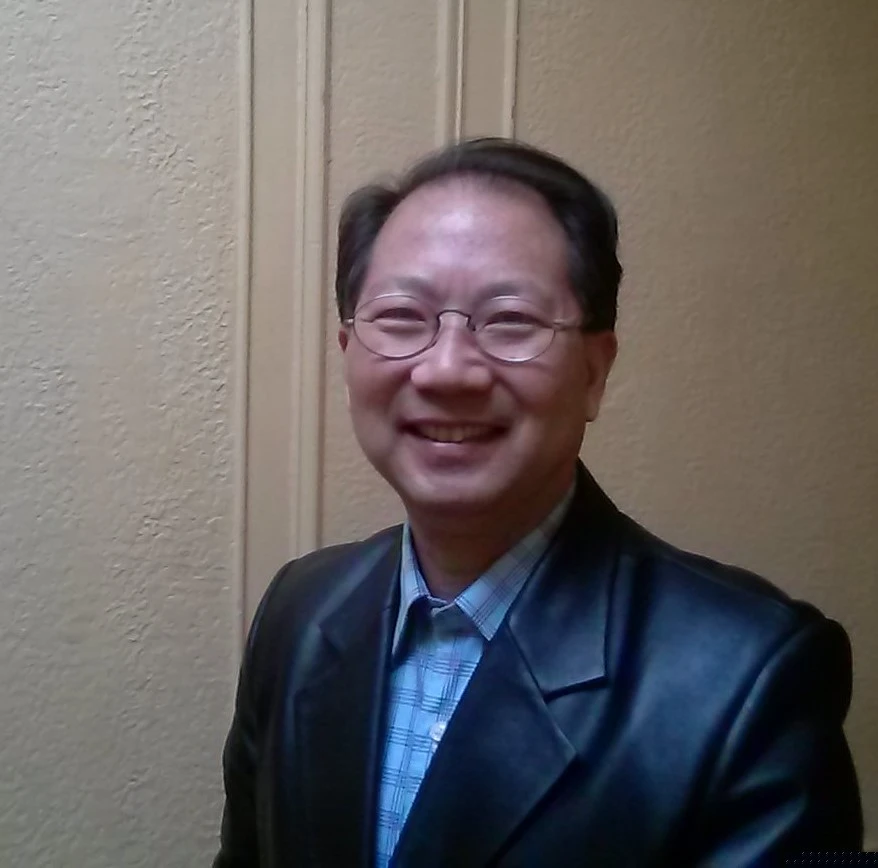
I graduated from Sun Yet-Sen University, China, in 1982. I was a math professor from 2000 to 2008. I taught undergraduate and graduate students Calculus, Operations Research, and Econometrics. I also was a math coach for math competitions for G3-12 students.
From 2012 to 2016, I was a math expert instructor at Aristotle Circle Inc. I published seven mathematics books in it. (1) Math Olympiads: Elementary Workbook; (2) Quantitative Comparisons / Reasoning Advanced Workbook; (3) Quantitative Comparisons / Reasoning Intermediate Workbook; (4) SCAT Advanced Workbook (Math Part); (5) SCAT Intermediate Workbook (Math Part); (6) ISEE Preparation Workbook: Middle Level (Math Part); and (7) ISEE Preparation Workbook: Lower Level (Math Part).
I already published 5 puzzle books on Amazon: (1) Smart Math: addition, Smart Math: addition and subtraction; (2) Smart Math: multiplication and division: (3) Smart Math: four operations; (5) Tangram Workbook. You can type the book’s name and my name to search on Amazon website. I hope you and your children can enjoy them. Playing math is a great way to learn math. Please feel free to ask me if you have any questions.
What are the key experience of my math teaching?
#1. I often say a teacher like a doctor, or a farmer, or a fisher. I always find out my problems in teaching when students have some problems. Doctors could not blame the patients, farmers could not blame the plants or weather or soil, and fishers could not blame the fish or river or sea. If students have some problems to understand, teachers need to find the teacher’s problem, and how to solve the problems. All students can excel in math if math teachers can use proper strategies to teach students.
#2. I teach math, not like a normal teacher, I teach students to research math and encourage them to ask why. When a student likes to ask why, it means the student is thinking. That is our purpose we learn math. We learn math not only knowledge, but also how to be creative thinking, critical thinking, and logical thinking.
#3. Teaching math must make the class fun and interesting. I try my best to train my students to be the leaders, scientists, doctors, engineers, inventors, and researchers of the future.
#4. Pay more attention on math concepts. Math is a language of science, and math vocabularies are math concepts. If students understand the definitions of math concepts, know why mathematicians made the definitions and how they found the math formulas and theorems from definition of concepts, and understand the main applications of math, they will have an excellent foundation and success in math. Students will become critical thinkers and problem solvers when they know the underlying math concepts.
09:30-10:30
10:45-11:45
12:00-13:30
19:00-20:30